
Representation at ALJ Disability Hearings
If your Social Security disability claim is headed to an Administrative Law Judge (ALJ) hearing, the process is paperwork-heavy, deadline-driven, and easy to derail with one missed notice, one late medical record, or one incomplete form. DWB LAW, LLC helps you prepare the evidence, organize the story of your case, and show up ready for the hearing format Social Security schedules, whether that is audio, agency video, online video, or in person.
EXCELLENTTrustindex verifies that the original source of the review is Google. I would like to express my sincere gratitude for the excellent service I received throughout my disability process. Attorney David Batchelder and his assistant Olga Mejía did a truly extraordinary job, demonstrating professionalism, commitment, and great human quality. Thank you for your dedication, constant support, and for making this process much clearer and more manageable. I highly recommend their team.Posted onTrustindex verifies that the original source of the review is Google. When my disability legal team in Rhode Island told me I needed to transfer to a legal team in Florida where we currently lived and they could recommend someone out of Miami I was skeptical because I felt like there couldn’t be anyone better than the team I had in Rhode Island. Boy, was I wrong!! David and Olga are the best!! The walked me through every step of the way to get my case settled, all over the phone because we live in Venice on the other side of the state. They never failed to return a call or even just call to check in. What a relief to get this case resolved after 3 years in 3 states, not an easy feat but they got it done and I am forever grateful!! Thank you both!! If you are looking for a disability attorney look no further than David Batchelder and Associates, you will not go wrong!!!Posted onTrustindex verifies that the original source of the review is Google. I’m writing this review on behalf of my mother. Her disability claim was initially denied, but once she got in contact with Olga and David, everything changed for the better. Olga was responsive, fast, and incredibly friendly, and David was both knowledgeable and professional. They handled all the paperwork and kept my mother updated every step of the way. We have absolutely no complaints and would 100% recommend their services.Posted onTrustindex verifies that the original source of the review is Google. If you need assistance with a disability case, I recommend you see David Batch elder. He is very knowledgeable and trustworthy. If he takes your case, it's because he believes he can win and he will fight for you to the end. His assistant Olga is just as stellar. They are a compassionate team who you can count on when you need them the most.Posted onTrustindex verifies that the original source of the review is Google. My wife’s claim was denied by the state disability board. I then contacted attorney David Batchelder. To make a long story short, my wife was approved within 4 months or so and she did not have to go to court to dispute the case. I am very GRATEFUL to Mr Batchelder and his assistant Olga who was always there to answer all my questions in real time. My thank you to both of them. J. LopezPosted onTrustindex verifies that the original source of the review is Google. David Batchelder went beyond for me, he is someone that will do there best for the client. I owe my life to David. Thank you so much. Olga knows what she is doing and gets the work done. She is my savior.Posted onTrustindex verifies that the original source of the review is Google. David and his team were very knowledgeable, accessible and persistent in their efforts to support me and protect my best interests.Posted onTrustindex verifies that the original source of the review is Google. The best lawyerPosted onTrustindex verifies that the original source of the review is Google. David Batchelder went above and beyond for my case. From the very first office visit, David and Olga made me feel comfortable and informed. Their honesty, kindness and attention to detail is impeccable. I am so grateful for their help and highly recommend him. Thank you David and Olga for your professionalism!Posted onTrustindex verifies that the original source of the review is Google. I highly recommend them for anyone looking to secure SSI benefits. They are a pleasure to work with on your case. They fight hard for what you are entitled to under the law and will not let you down. They fought for me for two years and they prevailed with their due diligence. Mr. Batchholder and his legal assistant Olga are the upmost professionals. They celebrated with me, and we all cried when they won my case. I owe them everything with all the love they showed me. They cared about me, and they were the light at the end of the tunnel for me. In addition, I live in Tallahassee and proved David can win a case anywhere in the state of Florida.
When the System Feels Like It Isn’t Listening
Table of Contents
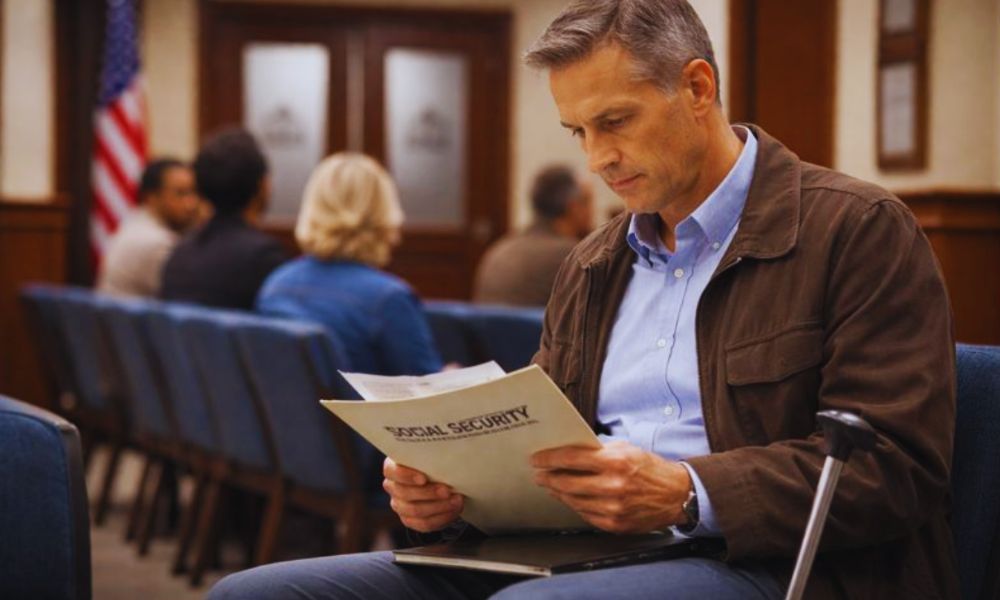
ToggleBy the time your case reaches the ALJ hearing level, you have usually already done months of forms, phone calls, record requests, and waiting. Many people are also trying to manage serious symptoms while the Social Security Administration asks for more documentation, more detail, and more patience.
This is the point where the process can feel personal. Letters arrive with strict instructions. The hearing office expects updated contact information. Evidence has a submission deadline. The hearing format can change depending on the notice you receive and what you accept or object to.
DWB LAW, LLC is a Miami-based practice focused on Social Security disability claims and appeals for disabled workers in South Florida. You will work with the firm as your case moves through hearing preparation, the hearing itself, and the written decision that follows.
What an ALJ Hearing Is and What Is Actually Decided There
An ALJ hearing is your opportunity to have a judge review your claim and issue a written decision based on the evidence in your file and testimony at the hearing. Social Security describes the hearing as informal, recorded, and conducted under oath or affirmation, with the judge explaining the issues and asking questions. In many disability hearings, the ALJ may also call a medical expert or vocational expert to testify, and you (and your representative, if you have one) may question witnesses.
That sounds straightforward until you are living it. In real life, the hearing is the moment where your medical records, work history, daily limitations, and credibility all have to line up with Social Security’s rules.
The Hearing-Level Bureaucracy—and Where People Get Stuck
-
Multiple notices, multiple deadlines
Social Security generally sends a Notice of Hearing well in advance, and it also sends a “Notice of Ways to Attend a Hearing,” which explains how you may appear and what forms you may need to return. Some hearing notices are produced and mailed through a central print process—read each new notice carefully and track any response deadlines.
-
The five-business-day evidence rule
For disability hearings, you must submit—or inform SSA about—written evidence no later than five business days before the hearing date.
The underlying regulations are in 20 C.F.R. § 404.935 (SSDI), including specific exceptions that may apply in limited situations.
-
You have to keep your contact information current
Social Security says hearing office staff communicate by mail and may also call you, and if you are scheduled for an online video, they may use email to send instructions. They also emphasize reporting changes in phone, mailing address, and email while the claim is pending.
-
Your chosen hearing format can become its own paperwork issue
Social Security’s current framework includes four standard modes of appearance: audio, agency video, online video, or in person.
Policies also explain how and when to object or agree after you receive the Notice of Ways to Attend a Hearing, including response deadlines. If you do not want audio or agency video, return form HA-55 within 30 days of the notice to object.
How DWB LAW, LLC Supports You Before the ALJ Hearing
Case file review and case theory
Before the hearing, your representative can help you understand what is already in the record, what is missing, and what needs to be clarified in plain language. Social Security states that you and your representative may look at the evidence in your case file and submit new evidence.
Evidence and record development, with the five-business-day rule in mind
A strong hearing record usually requires coordination with medical providers, hospitals, imaging centers, and sometimes employers. The hearing level makes timing matter because evidence is subject to the five-business-day requirement.
Hearing preparation that matches the way ALJs actually question people
The hearing is recorded, the judge may question you and witnesses, and you may be asked about symptoms, limitations, work history, and your day-to-day functioning. DWB Law helps you prepare for that structure so you are not walking into a high-stakes conversation cold.
Representation during the hearing, including witness questioning
Social Security states that you and your representative may question witnesses at the hearing. If a medical expert or vocational expert testifies, that is often where focused questioning can clarify the record.
Support after the hearing, through the written decision
After the hearing, the ALJ issues a written decision based on all evidence, and the hearing office mails the decision to you and your representative.
Hearing Formats and What They Mean for You
Social Security uses a Notice of Ways to Attend a Hearing to explain appearance options and related forms.
Audio hearings
Audio hearings are a standard option under Social Security’s current manner of appearance framework.
Agency video hearings
Agency video is also part of the standard framework, and policies describe how objections are handled under the notice process.
Online video hearings
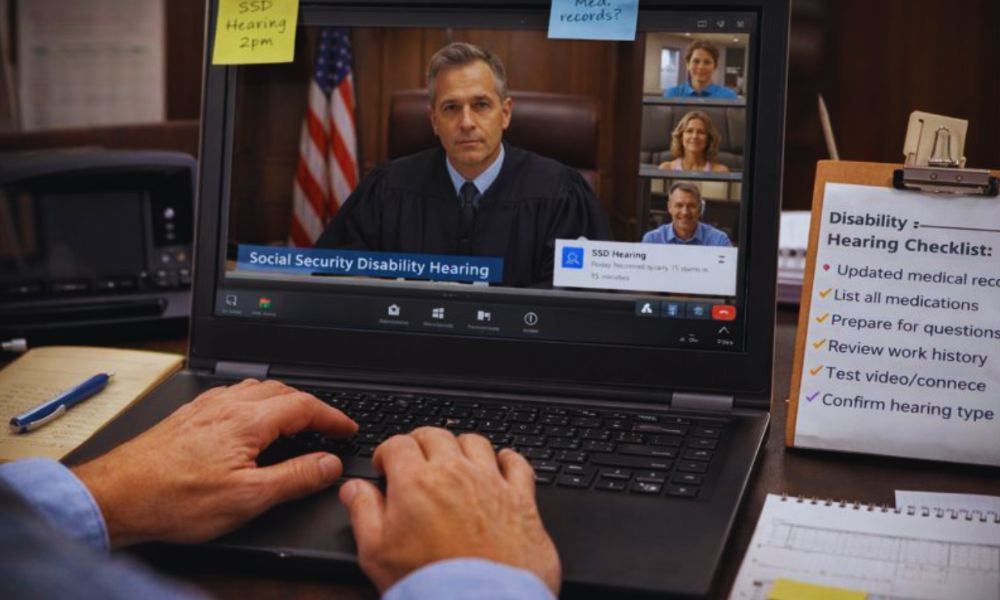
Online video hearings typically require agreement. Social Security provides guidance for online video hearings and representative preparation, including the use of Microsoft Teams and reminders about the official recording and rules around recording or screenshots. SSA uses the HA-56 Agreement to Appearing by Online Video; SSA will not schedule or proceed by online video without your agreement.
In-person hearings
In-person appearance remains one of the standard manners of appearance in the current system.
Built for People Who Have Carried Heavy Work for Years
If you are a police officer, firefighter, nurse, military service member, public servant, or someone who has done physically or mentally demanding work for decades, disability isn’t just a medical issue—it’s an identity shift and a paperwork battle.
Long careers often come with:
- Orthopedic wear and tear, chronic pain, or limited mobility that builds over years of duty.
- Cumulative exposure and repeated injuries.
- Mental health conditions that may be harder to explain on a form than in real life.
- Work histories with irregular schedules, overtime, and high-responsibility roles that do not translate neatly into checkboxes.
The hearing level is where your work history and functional limits need to be explained in a way that fits Social Security’s process, with medical support and consistent documentation. The goal is clarity: what you can do, what you cannot do, and why the record supports that.
DWB LAW, LLC represents disabled workers with meaningful work histories and handles disability hearings and appeals from its Miami office.
What You Can Do Right Now to Reduce Stress Before the Hearing
A practical checklist
- Keep every Social Security notice in one folder (paper or digital).
- Record your current mailing address, phone, and email—and report changes promptly.
- List every medical provider you’ve seen, with dates and locations.
- Request records early—the five-business-day evidence rule can become a problem fast.
- Track medications, side effects, and how symptoms affect daily tasks.
- Test your device and connection ahead of time for online video hearings.
If you miss your hearing date
Social Security tells claimants who miss a hearing to call the hearing office right away using the number on the Notice of Hearing.
Why People Hire Counsel for the Hearing Level
You are not required to have a representative, but Social Security recommends appointing one as early as possible so there is time to review the file and prepare for the hearing.
At this stage, representation often focuses on:
- Turning a stack of medical records into a clear timeline
- Meeting evidence rules and submission deadlines
- Preparing you for the judge’s questions and any expert testimony
- Handling procedural issues tied to hearing format, attendance, and notices
Service Areas
DWB LAW, LLC is based in Miami and serves clients across Miami-Dade County and Monroe County. We also assist clients nationwide in Social Security disability matters, including cases scheduled for audio, agency video, or online video hearings when available under SSA procedures and where representation is permitted. Because Social Security is a federal program, representation in many matters can be provided beyond Florida, subject to SSA procedures and permissions.
Related Services
We also offer the following services:
Frequently Asked Questions
Do I have to attend my ALJ hearing?
In most cases, you have to attend your ALJ hearing. Social Security says it is very important that you attend the hearing, and if you cannot attend, you should contact the hearing office as soon as possible and provide a written reason.
What happens at an ALJ disability hearing?
Social Security explains that at an ALJ hearing, the judge describes the issues, may question you and any witnesses (including medical or vocational experts), places testimony under oath or affirmation, and records the proceeding.
What is the five-business-day evidence rule?
For disability hearing requests, Social Security states you must submit or inform them about written evidence no later than five business days before the hearing date, and the detailed regulations are in 20 C.F.R. § 404.935 and § 416.1435.
Can my hearing be held by phone or video?
Social Security’s current framework includes audio, agency video, online video, and in-person as standard ways to attend, and the “Notice of Ways to Attend a Hearing” explains your options and forms.
What if there is a vocational expert at my hearing?
Social Security notes that an ALJ may ask a vocational expert to testify in disability hearings, and you and your representative may question witnesses.
How do I submit evidence to the hearing office?
Social Security accepts evidence by mail or fax (use the hearing office fax on your notices). If eligible, you or your representative may submit electronically using Electronic Records Express (ERE) or Appointed Representative Services (ARS) to upload records securely. Follow your notices for the correct method.
Present Your Case With Clarity and Confidence
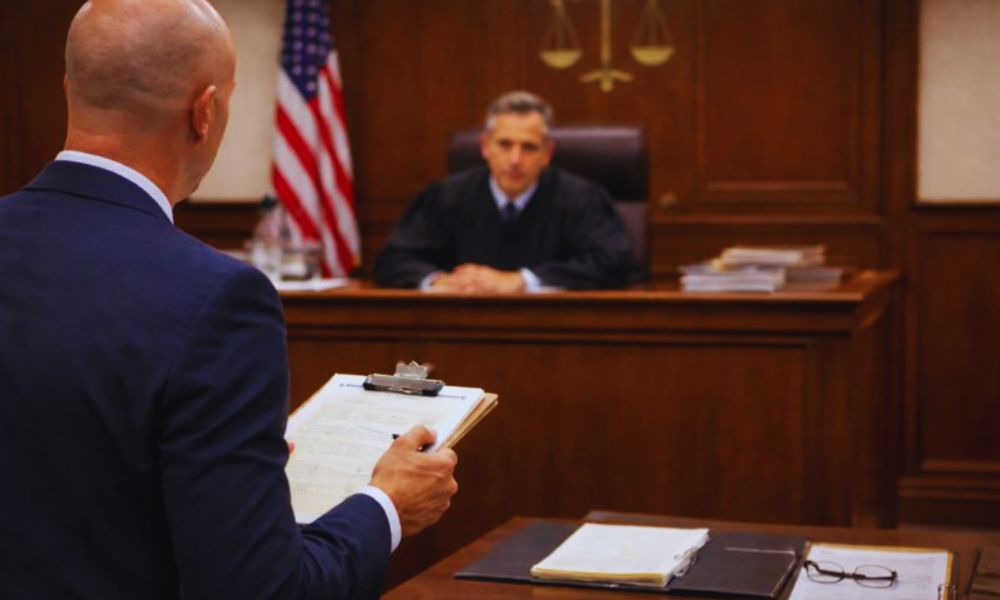
If you have an ALJ hearing coming up, you should not have to fight the process and your health at the same time. The hearing level is where the details matter most, the deadlines tighten, and the bureaucracy can feel relentless.
DWB LAW, LLC helps you take control of what the system demands: a complete record, a clear timeline, and testimony that matches the evidence. We track notices, manage the paperwork pressure, and prepare you for the questions so you can walk into your hearing with a plan instead of uncertainty.
Service Areas
DWB LAW, LLC
11900 Biscayne Blvd #280, North Miami, FL 33181, United States
(305) 371-8127
Legal Disclaimer
Disclaimer: This article provides general information and does not serve as legal advice. For legal concerns, consult a licensed attorney. Viewing or interacting with this content does not create an attorney-client relationship. This includes submitting a form, leaving a comment, sending a message, making a call, or leaving a voicemail. Laws may vary by jurisdiction. Laws are subject to change; always verify current legal requirements with a qualified professional. Remember that each case is different, the results of each case will vary, and that all videos posted on this website are not legal advice.
© All Rights Reserved.
Engagement Notice:
An attorney–client relationship with DWB LAW, LLC begins only upon a written agreement and retainer payment, confirmed in a signed engagement letter. Do not send confidential information until such an agreement is executed.