
Reconsideration Appeals
Reconsideration Appeals After an SSDI Denial
Table of Contents
ToggleIf your Social Security disability claim was denied, reconsideration is your next required step in most cases. It has tight deadlines, specific SSA forms, and a process that can feel like a maze of letters, portals, and “missing” records. DWB LAW, LLC can take over the paperwork, evidence gathering, and communications, so you can focus on your health while we build a cleaner, stronger appeal record for review.

EXCELLENTTrustindex verifies that the original source of the review is Google. I would like to express my sincere gratitude for the excellent service I received throughout my disability process. Attorney David Batchelder and his assistant Olga Mejía did a truly extraordinary job, demonstrating professionalism, commitment, and great human quality. Thank you for your dedication, constant support, and for making this process much clearer and more manageable. I highly recommend their team.Posted onTrustindex verifies that the original source of the review is Google. When my disability legal team in Rhode Island told me I needed to transfer to a legal team in Florida where we currently lived and they could recommend someone out of Miami I was skeptical because I felt like there couldn’t be anyone better than the team I had in Rhode Island. Boy, was I wrong!! David and Olga are the best!! The walked me through every step of the way to get my case settled, all over the phone because we live in Venice on the other side of the state. They never failed to return a call or even just call to check in. What a relief to get this case resolved after 3 years in 3 states, not an easy feat but they got it done and I am forever grateful!! Thank you both!! If you are looking for a disability attorney look no further than David Batchelder and Associates, you will not go wrong!!!Posted onTrustindex verifies that the original source of the review is Google. I’m writing this review on behalf of my mother. Her disability claim was initially denied, but once she got in contact with Olga and David, everything changed for the better. Olga was responsive, fast, and incredibly friendly, and David was both knowledgeable and professional. They handled all the paperwork and kept my mother updated every step of the way. We have absolutely no complaints and would 100% recommend their services.Posted onTrustindex verifies that the original source of the review is Google. If you need assistance with a disability case, I recommend you see David Batch elder. He is very knowledgeable and trustworthy. If he takes your case, it's because he believes he can win and he will fight for you to the end. His assistant Olga is just as stellar. They are a compassionate team who you can count on when you need them the most.Posted onTrustindex verifies that the original source of the review is Google. My wife’s claim was denied by the state disability board. I then contacted attorney David Batchelder. To make a long story short, my wife was approved within 4 months or so and she did not have to go to court to dispute the case. I am very GRATEFUL to Mr Batchelder and his assistant Olga who was always there to answer all my questions in real time. My thank you to both of them. J. LopezPosted onTrustindex verifies that the original source of the review is Google. David Batchelder went beyond for me, he is someone that will do there best for the client. I owe my life to David. Thank you so much. Olga knows what she is doing and gets the work done. She is my savior.Posted onTrustindex verifies that the original source of the review is Google. David and his team were very knowledgeable, accessible and persistent in their efforts to support me and protect my best interests.Posted onTrustindex verifies that the original source of the review is Google. The best lawyerPosted onTrustindex verifies that the original source of the review is Google. David Batchelder went above and beyond for my case. From the very first office visit, David and Olga made me feel comfortable and informed. Their honesty, kindness and attention to detail is impeccable. I am so grateful for their help and highly recommend him. Thank you David and Olga for your professionalism!Posted onTrustindex verifies that the original source of the review is Google. I highly recommend them for anyone looking to secure SSI benefits. They are a pleasure to work with on your case. They fight hard for what you are entitled to under the law and will not let you down. They fought for me for two years and they prevailed with their due diligence. Mr. Batchholder and his legal assistant Olga are the upmost professionals. They celebrated with me, and we all cried when they won my case. I owe them everything with all the love they showed me. They cared about me, and they were the light at the end of the tunnel for me. In addition, I live in Tallahassee and proved David can win a case anywhere in the state of Florida.
Reconsideration Appeals by DWB LAW, LLC
A Social Security denial often feels less like a decision and more like a bureaucracy problem you never asked for. Deadlines start running. Forms show up with unfamiliar numbers. You are told to submit evidence that you have already sent. You call, get transferred, wait on hold, and still do not get a clear answer.
Reconsideration is where many people get stuck: not because they do not “deserve benefits”—but because the process rewards detail, timing, and documentation. DWB LAW, LLC helps you move through reconsideration with a structured plan, clearer evidence, and fewer administrative mistakes that can slow or derail an appeal.
If you want to learn about the full roadmap, you can also explore our related services:
- Initial Disability Applications
- Representation at Administrative Law Judge (ALJ) Disability Hearings
- Vocational and Functional Capacity Analysis (RFC-focused)
- Disability Case Strategy and Benefit Eligibility Counseling
- Representation for Severe or Complex Medical Conditions
What Is a Reconsideration Appeal?
Reconsideration is the first level of appeal after an initial denial. It is a complete review of your claim by someone who did not take part in the first decision. The reviewer looks at the evidence already in the file, plus any new evidence you submit.
This is an important detail: reconsideration is not just “asking again.” It is your opportunity to correct gaps in the record, respond to the denial rationale, and submit stronger medical and functional evidence.
The deadline is short, and the SSA is strict about it
You generally must request reconsideration within 60 days after the date you receive your notice. SSA presumes you received the notice 5 days after its date unless you can show otherwise. If you miss the window, you may still file by showing good cause (e.g., hospitalization, serious illness, or documented mail issues). There is no automatic grace period—good cause must be established.
Why Reconsideration Feels So Frustrating
Most people do not struggle because they cannot fill out a form. They struggle because the system creates friction at every step.
Here is what reconsideration commonly feels like in real life:
You are managing a case while you are sick or injured.
You are trying to track appointments, medications, flare-ups, pain levels, and limitations. At the same time, you are expected to:
- Understand what the denial letter is really saying
- Meet deadlines that are easy to miss
- Submit evidence in the format the system accepts
- Repeat your story consistently across multiple forms and providers
- Follow up with offices that do not respond quickly
The file is often incomplete, even when you did everything you were told.
Social Security and the state Disability Determination Services (DDS) rely heavily on medical records to evaluate disability claims.
In practice, records can be missing, late, or too thin to show the full picture. You may also have care in multiple places: primary care, specialists, hospitals, PT, mental health, urgent care, VA, occupational health, and more. The more providers involved, the easier it is for the record to become fragmented.
The process uses technical categories that do not match how you live your life
SSA is not only looking at a diagnosis. They are evaluating how symptoms and limitations affect work-related functions. If the evidence does not clearly connect the dots, the result is often a denial that feels disconnected from reality.
Reconsideration Appeals for People Who Spent Their Careers Serving Others
Some of the most typical clients who face disability later in life are people who spent years in demanding roles, including:
- Police officers
- Firefighters
- Nurses and hospital staff
- Public servants and municipal workers
- Military service members and veterans
- People who have been in physically demanding jobs for decades
- Workers with 30 years of steady employment who reached a point where the body or mind could not keep up
If you spent your career showing up for the public, it can be especially infuriating to be treated like a case number when you finally need help. Reconsideration can feel like you are being forced to prove what your coworkers and family already know: the job took a toll, and continuing to work is not realistic.
Why These Careers Often Create Complicated Disability Records
High-demand careers often involve:
- Repetitive stress and cumulative wear over the years
- Shift work and sleep disruption
- High-stakes environments and chronic stress exposure
- Injuries that are well documented in some systems but not in others
- Treatment through employer networks, union clinics, military or VA systems, and multiple specialists
Those records often exist, but they’re not gathered into one coherent narrative. Reconsideration is a chance to organize that story into evidence that Social Security can actually use.
Common Reasons Claims Are Denied at the Initial Level
Your denial notice usually points to the SSA’s reasoning. Common patterns include:
Not enough medical evidence
Sometimes the evidence is real, but it is not complete. That can mean missing specialist notes, missing imaging, gaps in treatment documentation, or a lack of detail about ongoing symptoms.
The records do not clearly describe functional limitations
SSA evaluates what you can still do, not just what you have. If the file does not clearly show restrictions in standing, walking, lifting, reaching, concentration, pace, attendance, or social functioning, the claim can be denied even with serious diagnoses.
Inconsistent narratives across forms, visits, or reports
A single line in a record can be misread, especially when a provider writes “doing well” in a general sense, even though you still cannot work full-time. Consistency matters, and so does context.
The SSA relies on consultative exam findings that feel out of touch
A brief exam may not capture your day-to-day limitations. Reconsideration is where you push back with stronger documentation and a clearer timeline.
What DWB LAW, LLC Does During a Reconsideration Appeal
Reconsideration is paperwork-heavy, deadline-driven, and detail-sensitive. Our job is to take the administrative weight off you and build an appeal package that is easier for the SSA to evaluate fairly.
We translate the denial into a plan
We start by identifying what the SSA says is missing or unproven. Then we build a targeted checklist: what evidence to gather, what updates are needed, and what narrative needs to be clarified.
We handle the forms and filings
A disability reconsideration typically requires SSA appeal forms and supporting records. We prepare and submit the SSA-561 (Request for Reconsideration), coordinate the SSA-3441 (Disability Report – Appeal), and complete the SSA-827 (Authorization to Disclose Information to the Social Security Administration).
We coordinate these submissions so nothing important gets lost, misfiled, or delayed.
We work to complete the medical record
We help gather, organize, and submit updated records that show:
- Consistent treatment history
- Objective findings when available
- Physician observations and clinical notes
- Medication history and side effects
- Imaging, labs, and testing results
- Therapy notes and response to treatment
- Mental health documentation when relevant
- Hospitalizations or ER visits when relevant
We build a functional story that the SSA can evaluate
A strong appeal file usually connects:
- Your symptoms
- Your objective findings when present
- Your treatment course
- Your documented restrictions
- Your work history and job demands
- Your day-to-day limitations
This matters for long-term workers, including those with 30-year work histories, because the job demands and accumulated wear can be central to why work stopped being sustainable.
We manage communications so you are not stuck in call center loops
Getting a clear answer from an overloaded system is draining. Part of our value is reducing how often you have to chase updates, resubmit items, and spend your limited energy navigating confusing channels.
What You Can Expect During the Reconsideration Process
It is a new review, but it is still the same system
SSA describes reconsideration as an independent review of the initial evidence plus any new evidence submitted.
Strategy matters. The quality of what you submit, and how well it addresses the denial reasons, can influence how the reviewer sees your file.
Timelines vary
Processing times can vary significantly depending on location, staffing, and case complexity. SSA publishes open data on the average processing time for disability reconsideration.
If you have already been waiting months, this can feel like more punishment. We get it. Our role is to keep the file moving correctly and reduce avoidable delays like missing documents or incomplete responses.
Practical Ways to Strengthen a Reconsideration Appeal
These are common, legitimate ways to improve a record during reconsideration:
Keep treatment consistent where possible
Gaps can happen for many reasons, including cost, transportation, and symptoms. Still, consistent medical documentation often strengthens the record.
Document functional limitations in real terms
Instead of only describing pain or fatigue, you want your record to reflect functional limits such as:
- How long you can sit, stand, or walk before symptoms worsen
- How often you need to rest, lie down, or change positions
- How symptoms affect concentration, memory, and pace
- How you handle stress, interactions, or supervision
- How often you miss appointments or cancel due to symptoms
Show the difference between “can do a task” and “can sustain work”
Many people can do a task once, slowly, on a good day; competitive full-time work requires doing it reliably, repeatedly, and on schedule.
This distinction matters for demanding careers like nursing, firefighting, policing, and military roles, where the work is physically and mentally intense, and the margin for error is small.
For Police, Firefighters, Nurses, Public Servants, and Military Clients: How We Frame Your Work History

If you did hard work for years, your appeal should reflect that reality in a way that helps the SSA understand your vocational background.
We focus on:
- The physical and cognitive demands of your past work
- Exposure factors that may matter medically
- The real consequences of symptoms in safety-sensitive roles
- Why accommodations were not realistic, or were attempted and failed
- Why continuing work became unsafe, inconsistent, or medically impractical
This isn’t about drama, it’s about clarity.
When Reconsideration Is Denied, What Is Next?
SSA describes four levels of appeal: reconsideration, a hearing with an Administrative Law Judge, Appeals Council review, and federal court review.
If reconsideration is denied, you typically have the right to request a hearing with an Administrative Law Judge within a deadline set by SSA.
That is why reconsideration matters even when approval rates feel discouraging: it preserves your path forward and creates a stronger record for the next stage if needed.
Why Hire an Attorney for Reconsideration Instead of “Just Filing the Form”?
SSA explicitly states you may choose an attorney or other qualified person to help with an appeal.
In practice, representation can help because:
- The paperwork is only one part of the job
- The evidence often needs development, organization, and context
- The denial rationale needs a direct response, not a general statement
- Deadlines, proof requirements, and submission errors can quietly damage a claim
- You should not have to spend your energy fighting the system while managing your health
Our Approach at DWB LAW, LLC
A bureaucracy reduction model
We cannot make the SSA move fast. But we can reduce friction by:
- Creating a clear evidence checklist tied to the denial reasons
- Tracking deadlines and submission confirmations
- Coordinating records collection across multiple providers
- Organizing exhibits and summaries for easier review
- Keeping you updated without burying you in technical language
You stay informed without being overloaded
You deserve to know what is happening in your case. We focus on clear updates:
- What we submitted
- What we are waiting on
- What the SSA requested
- What the next deadline is
- What the next decision point will be
Service Areas
DWB LAW, LLC serves clients in Miami-Dade County and Monroe County and represents Social Security disability claimants nationwide in federal administrative proceedings.
Even when you live outside South Florida, the Social Security disability process follows federal rules and centralized systems. That means we can often handle much of your case remotely, including paperwork, evidence coordination, and SSA communications, while keeping you updated at each step.
If you are in Miami-Dade or Monroe County, we can provide the same structured support while also understanding the local rhythm of medical care networks and record requests. If you are anywhere else in the United States, you still get the same goal: reduce the bureaucracy burden and build a clearer, stronger Reconsideration Appeal record.
Services We Offer
If you need help at a specific stage or your claim involves more complicated issues, explore these related services:
- Social Security Disability Insurance Representation
- Initial Disability Applications
- Representation at Administrative Law Judge (ALJ) Disability Hearings
- Vocational and Functional Capacity Analysis
- Disability Case Strategy and Benefit Eligibility Counseling
- Representation for Severe or Complex Medical Conditions
Frequently Asked Questions
How long do I have to file a Reconsideration Appeal?
SSA generally instructs claimants to file a request for reconsideration within 60 days after receiving the decision notice.
What is reviewed during reconsideration?
Reconsideration is a complete review of the evidence from the initial decision, plus any new evidence you submit. A reviewer who did not take part in the first decision examines your existing file and any new evidence you submit.
Can I file a reconsideration online?
If you were denied for medical reasons, you can request reconsideration online. Non-medical reconsiderations use a separate path or the SSA-561 paper form.
What forms are commonly involved?
SSA provides Form SSA-561 (Request for Reconsideration). Disability appeals also commonly involve the SSA-3441 (Disability Report – Appeal) and the SSA-827 (Authorization to Disclose Information to the Social Security Administration) to help SSA obtain medical records.
If reconsideration is denied, what is the next step?
SSA lists the appeal levels as reconsideration, a hearing with an Administrative Law Judge, Appeals Council review, and federal court review. If you disagree with the reconsideration decision, you can request a hearing with a judge within the timeframe SSA provides.
Let Us Help with Your Reconsideration Appeal
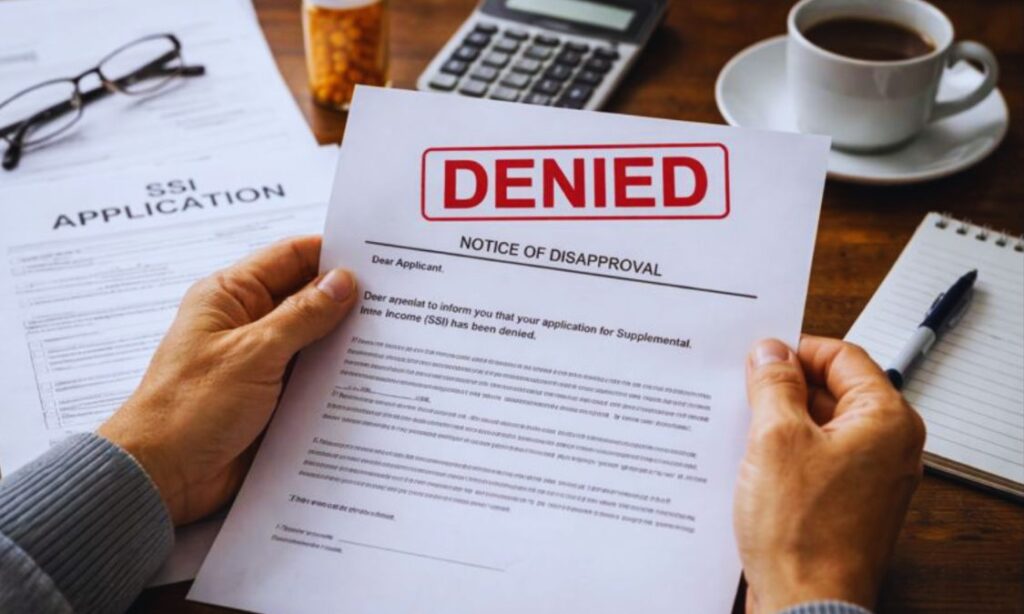
If you received a denial and you are staring at a stack of SSA paperwork, you do not have to do this alone. Contact DWB LAW, LLC to discuss your Reconsideration Appeal and what needs to happen next.
Reconsideration Appeal today
DWB LAW, LLC
11900 Biscayne Blvd #280, North Miami, FL 33181, United States
(305) 371-8127
Legal Disclaimer
Disclaimer: This article provides general information and does not serve as legal advice. For legal concerns, consult a licensed attorney. Viewing or interacting with this content does not create an attorney-client relationship. This includes submitting a form, leaving a comment, sending a message, making a call, or leaving a voicemail. Laws may vary by jurisdiction. Laws are subject to change; always verify current legal requirements with a qualified professional. Remember that each case is different, the results of each case will vary, and that all videos posted on this website are not legal advice.
© All Rights Reserved.
Engagement Notice:
An attorney–client relationship with DWB LAW, LLC begins only upon a written agreement and retainer payment, confirmed in a signed engagement letter. Do not send confidential information until such an agreement is executed.